Roofing
Roof Repair in Delaware
A roof leak can travel along framing or insulation before it appears inside, making the visible stain only one clue.
- No-cost request
- Matched by ZIP code
- Across Delaware
01
Recognize Problems That Deserve Attention
A roof leak can travel along framing or insulation before it appears inside, making the visible stain only one clue. Effective repair starts by identifying the entry point and checking the surrounding assembly, not by applying sealant wherever moisture becomes noticeable. Delaware homeowners may need help with missing shingles, failed flashing, low-slope transitions, or recurring leaks after wind-driven rain. DE Roofing Pros is a free SoleSource Pros referral service rather than a roofing contractor. It refers your request to one independent licensed and insured roofer and never sells that request to multiple contractors.
New ceiling marks, damp attic insulation, loose roof covering, and water near a chimney all justify investigation. Outside clues may include lifted shingles, exposed fasteners, deteriorated pipe boots, or debris collecting in valleys. Some conditions are visible from the ground, but roof access should be left to someone with appropriate equipment and training. Do not climb onto wet, damaged, or steep roofing to confirm a suspicion.
If water is entering, protect belongings from a safe position and keep people away from sagging ceilings. Water near electrical fixtures requires particular caution and may call for an electrician or emergency assistance. Record when the leak appears, the direction of the rain, and whether it happens during every storm. These observations can help narrow the investigation.
02
Look Beyond the Most Obvious Defect
A missing shingle may be the entire problem, or it may sit beside weakened underlayment and damaged decking. Similarly, a leaking skylight might involve the surrounding flashing rather than the glazing itself. Ask the roofer to explain the likely water path, show accessible photographs, and distinguish confirmed defects from areas that remain uncertain until limited materials are removed.
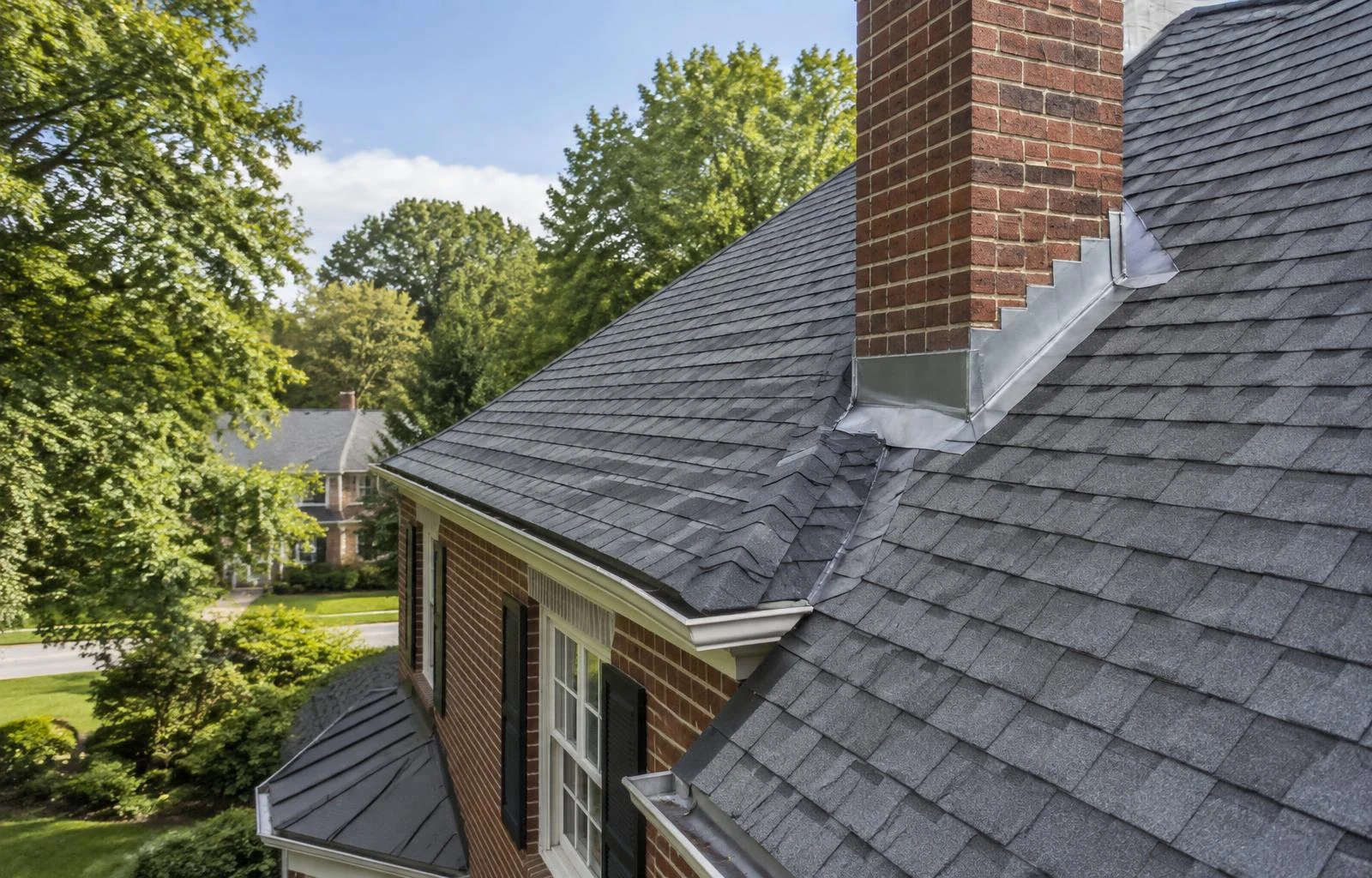
Chimney intersections, sidewalls, valleys, and changes in roof slope deserve close attention. Repair methods should suit the material and movement of those details. Repeated surface coatings can sometimes obscure an underlying defect instead of correcting it. A useful estimate identifies what will be opened, which components will be replaced, and how the repaired area will connect to the existing roof.
03
Account for Local Homes and Weather Exposure
Greenville and Hockessin include older stone and brick properties where slate, masonry junctions, and legacy flashing details require careful evaluation. In Newark and Bear neighborhoods developed between the 1960s and 1990s, repairs may involve previous reroofing work or aging penetrations. Newer Middletown homes can still develop isolated installation defects; a relatively recent construction date does not eliminate the need for a thorough inspection.
Kent County properties may combine a residence with metal-roofed farm buildings, each requiring different repair methods. Sussex beach homes face salt exposure and coastal winds that can affect metal components and fastening. For a second home, arrange a reliable way to authorize work and receive photographs. Inland and coastal roofs should be evaluated on their actual condition, not treated as interchangeable.
Ready for a roofing estimate?
Give your project location for a focused introduction to a roofer working nearby.
04
Choose Repair or Replacement Deliberately
Targeted repair is often sensible when damage is localized and the surrounding covering has useful life remaining. Widespread brittleness, recurring leaks on several slopes, extensive decking deterioration, or incompatible previous patches can change that calculation. Ask for the expected limits of the repair, including whether matching materials are available and whether adjoining components may become the next likely failure points.
Compare the repair cost with the condition of the entire system, not with an assumed replacement deadline. A repair may buy useful time without making an old roof new. If replacement is recommended, request specific reasons and supporting observations. The goal is an informed scope that addresses the current problem without overstating what limited work can accomplish.
05
Get a Clear Scope Before Authorizing Work
Ask the contractor to show a Delaware business license and provide proof of liability and workers’ compensation insurance. Require a written contract identifying the repair area, materials, access arrangements, payment terms, and any workmanship warranty. Check city or county permit requirements locally, particularly when work expands beyond a small repair. Avoid relying on generalized claims about what every Delaware jurisdiction allows.
Hidden damage should have an approval process. Ask whether the contractor will pause, photograph findings, and provide a price before increasing the scope. Discuss how exposed areas will be protected if replacement materials are delayed. When work is complete, obtain a concise explanation of the correction and retain before-and-after images. Monitor the area during subsequent rain without assuming an interior stain will disappear immediately.
Questions
Frequently asked questions
Go deeper
Related roofing services
Roof Replacement
Compare roof replacement options, installation details, and written estimates for your Delaware home.
Learn moreStorm Damage Roof Repair
Plan safe first steps, document storm damage, and arrange a roof assessment after severe Delaware weather.
Learn moreEmergency Roof Tarping
Arrange an assessment for temporary roof protection while permanent repair needs are evaluated.
Learn moreFlat Roofing
Explore repair and replacement options for low-slope roofs on Delaware homes, additions, and porches.
Learn more
Get started
Ready to get your project started?
Your Delaware project goes to one independent roofer, not a list of competing businesses.